
How to Become a Travel Nurse: Steps, Skills & Career Requirements
December 26, 2024
Hospitals nationwide face ongoing challenges in maintaining nursing staff. The national RN turnover rate sits at 16.4%, and more than 22% of newly hired registered nurses leave their positions within the first year, creating persistent staffing gaps that facilities increasingly fill with travel nurses.
As a result, travel nursing has become one of the most accessible and financially competitive career paths in the profession, often surpassing the benefits of traditional full-time roles.
For nurses considering the transition, this article covers everything you need to know about how to become a travel nurse: the qualifications and licensing requirements for 2026, a step-by-step path to landing your first assignment, and how staffing agencies like GHR help match you to opportunities nationwide.
Travel Nurse Requirements in 2026
Before pursuing travel assignments, you must meet a baseline set of qualifications. Knowing what these are upfront will help you avoid delays when it’s time to apply.
| Requirement | Details |
|---|---|
| Nursing Degree | ADN or Bachelor's degree in nursing from an accredited nursing program |
| NCLEX-RN | Active, unencumbered RN license required |
| Clinical Experience | 1–2 years of recent bedside nursing experience in a specialty |
| State Licensing | NLC compact license or individual state licenses |
| Certifications | BLS required; ACLS for ICU, emergency room (ER), cardiac |
Earn a Nursing Degree
You must hold an Associate Degree in Nursing (ADN) or a Bachelor of Science in Nursing (BSN) from an accredited nursing education program. While both degrees qualify you for licensure, many hospitals and specialty units prefer or require a BSN degree, particularly for competitive assignments.\
Pass the NCLEX-RN
You must pass the National Council Licensure Examination for Registered Nurses (NCLEX-RN) to obtain an RN license.
All travel nursing positions require a nursing license that is active and in good standing with no restrictions or disciplinary actions.
Gain Clinical Experience
Most travel assignments require one to two years of recent bedside experience or years of experience in specific nursing specialties. Common in-demand specialties include ICU, ER, Med-Surg, Labor and Delivery, and OR.
You will be expected to be prepared to work autonomously with limited orientation with minimal orientation, so strong foundational skills in a defined specialty are essential.
Meet State Licensing Requirements
Licensing is one of the most logistically complex aspects of travel nursing, and 2026 brings several updates for those interested.
- The Nurse Licensure Compact (NLC) allows you to hold a single multistate license that grants practice privileges across all member states.
By 2026, 43 states are expected to be full NLC members, with several others in progress., with several more in progress. Pennsylvania fully implemented its NLC membership in July 2025, and Connecticut joined in October 2025. States including Alaska, Hawaii, Illinois, Michigan, Minnesota, New York, Oregon, and Washington, D.C., introduced NLC legislation in 2025 and are expected to continue that process through 2026.
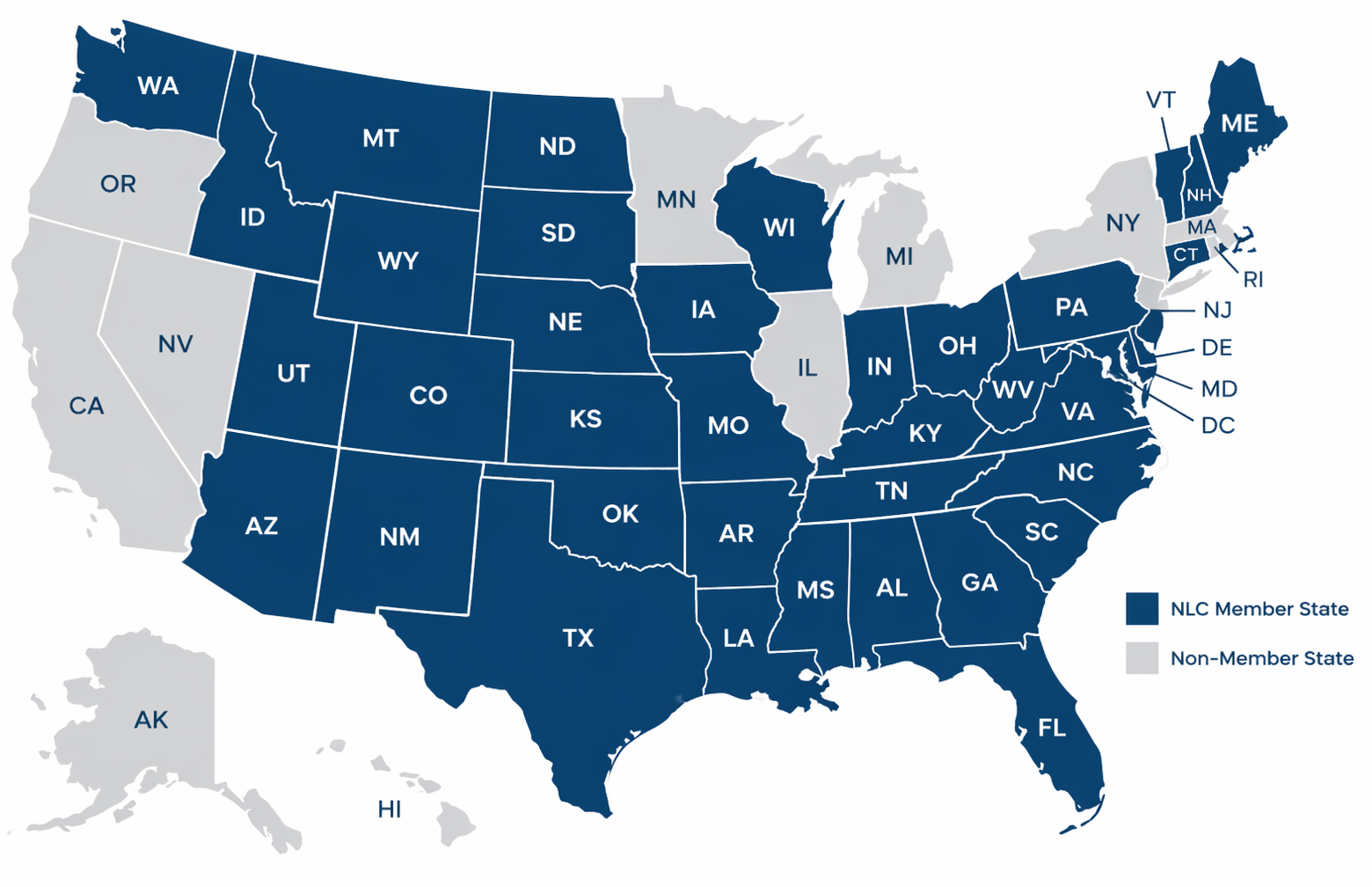
To qualify, you must live in an NLC member state and apply through that state’s board of nursing. If you relocate from one compact state to another, you must apply for licensure in your new primary state within 60 days.
If your primary residence is in a non-compact state, you must obtain individual state licenses for each state where you plan to work. This adds time and cost to credentialing, though staffing partners, also known as travel nurse agencies, like GHR, can assist with navigating the process.
Note for APRNs: The NLC does not cover advanced practice nurses, such as nurse practitioners. As of 2026, four states — Delaware, North Dakota, South Dakota, and Utah — have enacted the APRN Compact, with five more states, including New York and Arizona, carrying pending legislation. The compact will not become operational until seven states enact it, meaning all APRNs still require individual state licenses in each state where they practice.
Certifications
BLS certification is required for virtually all travel nursing positions. ACLS is standard for ICU, ER, cardiac, and other critical care assignments. Additional specialty certifications strengthen your profile and expand your travel nurse assignment options.
For a full overview of relevant credentials, see the nursing certifications to have.
Steps to Start Your Travel Nursing Career:
Step 1: Build Clinical Experience
Spend at least one to two years in a specialty unit before pursuing travel assignments. Facilities posting travel contracts expect you to step into the role with minimal ramp-up. The more defined and documented your specialty experience, the stronger your application.
Step 2: Choose a Staffing Agency
Most travel nurses find and secure assignments through staffing partners. They handle contract negotiation, credentialing verification, and, in many cases, housing coordination. Choosing a reputable partner with dedicated recruiters makes a significant difference in the quality of your placements and your ongoing support.
Read more about working with a travel nurse recruiter to understand what to look for.
GHR Healthcare connects nurses with travel nursing jobs at hospitals and healthcare systems nationwide. Our recruiters work directly with you to match your qualifications to open positions and provide support through credentialing and onboarding.
Step 3: Prepare Your Resume and Credentials
A strong travel nursing resume clearly documents your specialty experience, certifications, and the specific unit types and patient populations you have worked with. Along with optimizing your resume, make sure to gather current copies of all your certifications, state licenses, immunization records, and professional references, too.
Step 4: Understand Housing and Compensation
Your travel nursing compensation typically includes taxable base pay, non-taxed nursing housing and meal stipends, and in some cases, a travel reimbursement.
Step 5: Apply and Interview
When applying for assignments, be prepared to discuss your clinical experience in specific terms: patient ratios, acuity levels, and relevant procedures or equipment. Many facilities conduct brief interviews before confirming placement. For a full overview of what to expect, see preparing for your travel nurse interview.
How Staffing Agencies Help Travel Nurses Find Opportunities
Staffing partners handle the logistics of what makes travel nursing manageable. A good agency assists you with:
- Job placement: Matching you to open positions based on your specialty, experience, and location preferences
- Credentialing: Verifying your licenses, certifications, and immunization records before an assignment begins
- Licensing support: Navigating individual state license applications if you are based in a non-compact state
- Housing coordination: Arranging agency-provided housing or managing your stipends
- Contract negotiation: Reviewing terms and clarifying your pay package structure before you commit
GHR Healthcare connects you with travel assignments at hospitals and healthcare facilities across the country. Browse current openings and find a position that matches your specialty and location preferences at nursing careers.
Start Your Travel Nursing Journey Today with GHR Healthcare
Travel nursing offers you more control over where you work, when you work, and what you earn. Finding the right assignments to make that happen starts with the right staffing partner.
GHR Healthcare connects travel nurses across specialties with assignments at hospitals and healthcare systems nationwide. Our recruiters bring deep specialty knowledge to every placement, matching your clinical background to positions where your skills are genuinely needed.
With 24/7 live support and a team that prioritizes real human connection over automated processes, GHR provides full support through credentialing, licensing, and onboarding. Connect with a GHR recruiter today to explore travel assignments in your specialty.
Becoming a Travel Nurse FAQs
To become a travel nurse, complete a BSN or ADN, obtain your RN license, gain one year of clinical experience, and apply through a reputable staffing agency like GHR Healthcare.
It typically takes 2–4 years to earn your nursing degree and gain the required experience before qualifying for travel assignments.
Travel nurses need adaptability, communication, independence, and strong critical thinking skills to thrive in diverse clinical settings.
Most travel nurses use a multi-state nursing license through the Nurse Licensure Compact (NLC), allowing them to work in multiple states without reapplying.
GHR Healthcare provides nationwide travel placements, licensing guidance, housing assistance, and dedicated recruiters for ongoing career support.


Subscribe to GHR's Blog Newsletter
Your submission was successful.
Thank you for subscribing — we'll be in touch!