Flu and COVID Season Workforce Planning
November 23, 2026
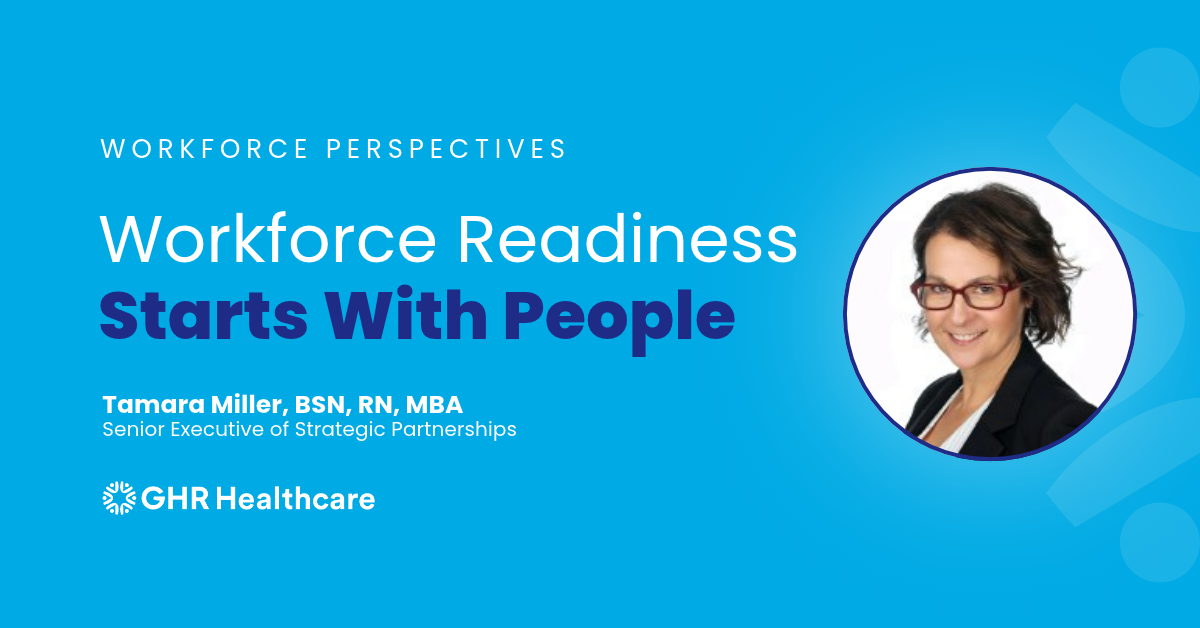
By Tamara Miller, BSN, RN, MBA
As a nurse, I have never looked at an increase in patient volume as just a number. I think about the person waiting for a bed, the family waiting for answers, and the nurse trying to give each patient the time and attention they deserve.
During flu and COVID season, those needs can build quickly. And the people responding to them are often managing the same illnesses and worries at home.
Working with hospitals and health systems over the years has broadened my understanding of what it takes to keep care moving. Yet I still come back to what I learned at the bedside: patients feel the effects when the people caring for them are stretched too thin. So do employees, their families, and ultimately the organizations and communities that rely on them.
Preparing for seasonal demand is not simply a matter of forecasting patient volume. It means understanding what that demand will ask of the people providing care and making sure they have the support to meet it.
Seasonal Demand Affects The Entire Care Environment
Recent data show how significant that demand can become. In a September 2025 report, CDC surveillance found that the cumulative influenza-associated hospitalization rate during the 2024–2025 season was the highest recorded since the 2010–2011 season. Among hospitalized patients, 16.8% were admitted to an intensive care unit. These findings underscore the need to prepare not only for more admissions, but also for patients who may require substantial clinical support.
At the same time, every other healthcare need continues. Someone arrives with chest pain. An older adult needs treatment after a fall. A patient recovering from surgery needs an inpatient bed. Emergency departments and urgent care clinics may be getting busier while inpatient teams manage increased demand.
And an available bed requires much more than a bed.
Nurses, physicians, respiratory therapists, pharmacists, environmental services professionals, transport teams, case managers, and many others all play a role in keeping care moving. When one area is struggling, the effects can reach across the organization. For patients and families, that pressure may mean longer waits, more uncertainty, and concern about what happens next.
Workforce Plans Need Room to Adjust
Flu and COVID do not always follow predictable patterns.
A March 2025 research letter in Emerging Infectious Diseases evaluated projections of U.S. hospitalizations associated with COVID-19, influenza, and RSV during the 2023–2024 season. While the projections captured the combined seasonal peak, they did not capture COVID-19’s multiple waves.
For me, there is an important leadership lesson in that: a workforce plan has to be able to change when conditions do.
That means reviewing local demand regularly, listening to department leaders, and deciding in advance what changing conditions will trigger additional support. A plan developed months earlier still needs to reflect what teams are experiencing today.
It takes communication across departments and a willingness to act before mounting pressure becomes a crisis.
Healthcare Workers Get Sick, Too
This is one part of seasonal planning I believe we sometimes move past too quickly.
Healthcare workers get sick. Their children get sick. Their partners need help, and their aging parents may depend on them. Those responsibilities do not disappear when they walk through the hospital doors.
Calling in sick can be difficult when you know your colleagues are already stretched. Employees may worry about who will cover their assignment or whether the same person will be asked to stay late again. Managers are left balancing immediate patient needs with the well-being of the people on their teams.
A policy telling employees to stay home when they are sick needs practical support behind it.
Who will provide coverage? How often are the same people being asked to step in? What options does a manager have when several employees are unavailable?
Asking those questions before the pressure builds gives leaders more room to respond and employees greater confidence that they will be supported when they need it.
Hiring Is Part of Workforce Readiness
In my work with healthcare organizations, I hear how much pressure an open position can place on a department. I also see how much work happens behind the scenes to fill one.
Recruiters coordinate interviews, answer candidate questions, follow up on feedback, and help leaders work through hiring decisions, often while managing many openings at once. Seasonal demand can add another layer of urgency while talent professionals navigate the same illnesses and family responsibilities as everyone else.
They need clear priorities and responsive hiring managers. When every requisition is urgent, it becomes difficult to know where to focus first.
Healthcare leaders can help by identifying which vacancies are having the greatest impact on patient access, employee workload, and day-to-day operations. Protecting interview time, providing timely feedback, and addressing approval or compensation barriers early can keep important searches moving.
When outside recruitment support makes sense, responsibilities should be clear so the partnership truly adds capacity and supports the internal team.
Four Questions Healthcare Leaders Should Be Asking
1. Where is pressure building?
Patient volume tells only part of the story. Look at employee absences, overtime, persistent vacancies, and recurring coverage challenges alongside admissions and emergency department visits.
Bring nursing, operations, human resources, and talent acquisition into the same conversation. Where are teams already stretched? What would trigger the need for additional support? Who needs to act when that happens?
2. Can employees realistically stay home when they're sick?
Clear policies matter, but so does the infrastructure behind them.
Look at whether coverage depends too heavily on the same employees consistently picking up extra work. Their willingness to help deserves appreciation, but it cannot be the long-term solution.
People need the ability to rest when they are sick and care for family members when needed without creating unsustainable pressure for everyone around them.
3. Does everyone understand the hiring priorities?
Identify the vacancies most affecting patient access, employee workload, and reliable operations.
Then make sure the people involved in hiring understand those priorities. Recruiters can move only as quickly as the process around them allows. Interview availability, timely feedback, compensation decisions, and approvals all matter when an important role needs to be filled.
4. Which staffing gaps keep coming back?
Seasonal demand often exposes workforce challenges that have been creating strain long before flu season begins.
Roles that repeatedly require overtime or pull managers away from leadership responsibilities deserve a closer look. Permanent hiring can strengthen the core team, while flexible coverage can help organizations manage changing volumes and absences.
But staffing is only part of the conversation. Leaders should also ask what current employees need in order to stay, whether that means better onboarding, more sustainable schedules, stronger communication, or more day-to-day support.
Taking Care of Our Communities Starts With Our People
One question I believe leaders should ask more often is:
“What is making it hardest for you to do your job right now?”
The answer may be a vacancy. It may be a delayed decision, an unreliable handoff, or a schedule that has become difficult to manage.
We may not be able to fix everything immediately. But we can listen carefully, be honest about what we can do, and follow through.
Preparing for flu and COVID season means recognizing how closely the needs of our patients, employees, organizations, and communities are connected. Patients need timely, compassionate care. Employees need support when they or their families become ill. Healthcare organizations need workforce plans that can respond as those needs change.
Having spent my career in healthcare, I believe taking care of our people is one of the most meaningful ways we take care of our communities.
Thoughtful hiring, realistic expectations, and dependable leadership give healthcare teams a stronger foundation, not just during flu and COVID season, but in every season.
About the Author

Tamara Miller, BSN, RN, MBA
Senior Executive of Strategic Partnerships, GHR Healthcare
Tamara brings a nurse’s perspective to workforce strategy, helping healthcare organizations strengthen their teams through thoughtful hiring and strategic workforce partnerships.

Subscribe to GHR's Blog Newsletter
Your submission was successful.
Thank you for subscribing — we'll be in touch!